Skip to Content
Merck
CN

117323

4,4′-Methylene-bis(2-chloroaniline)

85%

Synonym(s):

2,2′-Dichloro-4,4′-methylenedianiline, 4,4′-Diamino-3,3′-dichlorodiphenylmethane

Sign In to View Organizational & Contract Pricing.

Select a Size


About This Item

Linear Formula:
CH2[C6H3(Cl)NH2]2
CAS Number:
Molecular Weight:
267.15
UNSPSC Code:
12162002
NACRES:
NA.23
PubChem Substance ID:
EC Number:
202-918-9
Beilstein/REAXYS Number:
1882318
MDL number:
Technical Service
Need help? Our team of experienced scientists is here for you.
Let Us Assist
Technical Service
Need help? Our team of experienced scientists is here for you.
Let Us Assist

InChI key

IBOFVQJTBBUKMU-UHFFFAOYSA-N

InChI

1S/C13H12Cl2N2/c14-10-6-8(1-3-12(10)16)5-9-2-4-13(17)11(15)7-9/h1-4,6-7H,5,16-17H2

SMILES string

Nc1ccc(Cc2ccc(N)c(Cl)c2)cc1Cl

assay

85%

form

solid

bp

202-214 °C/0.3 mmHg (lit.)

mp

102-107 °C (lit.)

Quality Level

Looking for similar products? Visit Product Comparison Guide

flash_point_c

113 °C - closed cup

signalword

Danger

Hazard Classifications

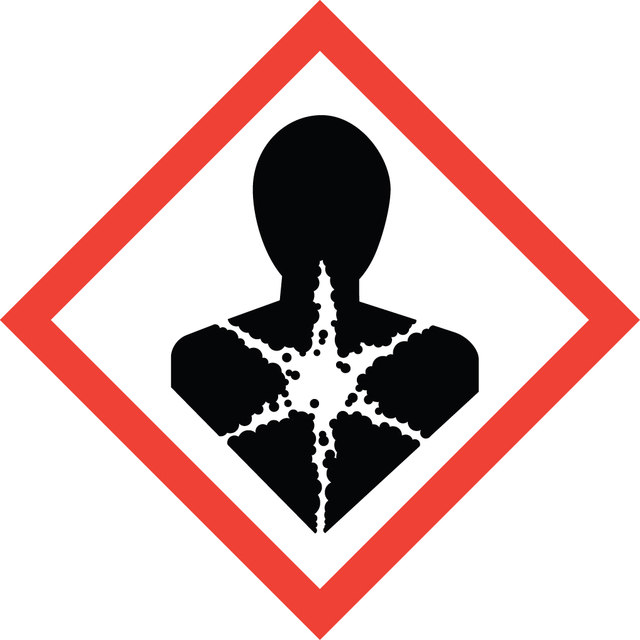
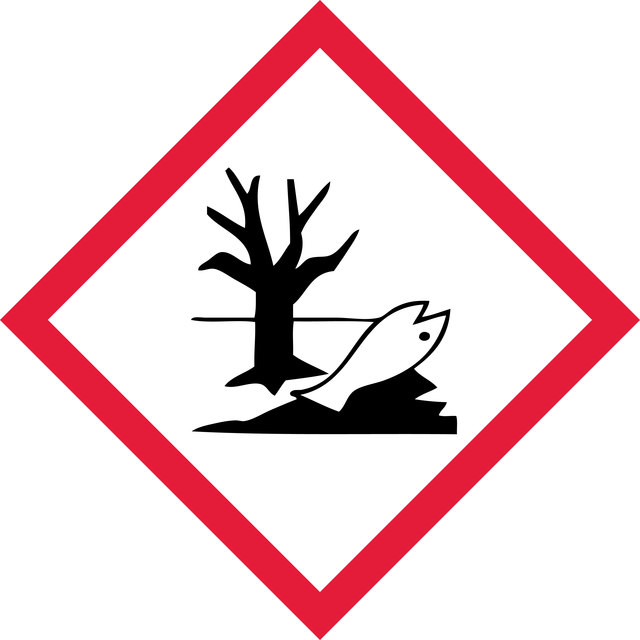
Acute Tox. 4 Oral - Aquatic Acute 1 - Aquatic Chronic 1 - Carc. 1B - Muta. 2

Storage Class

6.1C - Combustible acute toxic Cat.3 / toxic compounds or compounds which causing chronic effects

wgk

WGK 3

flash_point_f

235.4 °F - closed cup

Regulatory Information

危险化学品
This item has

Choose from one of the most recent versions:

Certificates of Analysis (COA)

Lot/Batch Number

Don't see the Right Version?

If you require a particular version, you can look up a specific certificate by the Lot or Batch number.

Already Own This Product?

Find documentation for the products that you have recently purchased in the Document Library.

Visit the Document Library

P Vineis et al.
Cancer causes & control : CCC, 8(3), 346-355 (1997-05-01)
Epidemiological evidence on the relation between aromatic amines and cancer risk is reviewed. In particular, cancer risk in humans resulting from exposure to aromatic amines from occupational sources and tobacco smoking is assessed with reference to ecologic, cohort, and case-control
Evaluation of worker exposure to TDI, MOCA, and methylene chloride.
Richard Fairfax et al.
Journal of occupational and environmental hygiene, 3(6), D50-D53 (2006-04-20)
A Jeżewska et al.
Toxicology mechanisms and methods, 21(7), 554-560 (2011-04-09)
A new procedure has been developed for the assay of 2,2'-dichloro-4,4'-methylenedianiline (MOCA) using high-performance liquid chromatography with diode array detector. MOCA was sampled from workplace air and derivative before determination using 3,5-dinitrobenzoyl chloride. The determination was carried out in the
T M Reid et al.
Toxicology letters, 95(3), 205-210 (1998-08-15)
The genotoxic potential of two occupationally significant chemicals, 4,4'-methylene-bis-2-chloroaniline (MOCA) and 2-phenyl-1,4-benzoquinone (PBQ), was explored by monitoring the induction of mutations at the HPRT locus of AHH-1 human lymphoblastoid cells. Exposure of AHH-1 cells to the putative carcinogenic metabolite of
Hong-I Chen et al.
Urology, 66(2), 305-310 (2005-08-16)
Transitional cell carcinoma of the urinary bladder is associated with occupational exposure to 4,4'-methylenebis(2-chloroaniline) (MBOCA). A program to monitor MBOCA levels in the work environment and to screen for bladder cancer was performed at four MBOCA manufacturing factories. The U.S.

Our team of scientists has experience in all areas of research including Life Science, Material Science, Chemical Synthesis, Chromatography, Analytical and many others.

Contact Technical Service