Skip to Content
Merck
CN

109274

2-Chloropropionic acid

92%

Synonym(s):

(±)-2-Chloropropionic acid

Sign In to View Organizational & Contract Pricing.

Select a Size


About This Item

Linear Formula:
CH3CHClCOOH
CAS Number:
Molecular Weight:
108.52
NACRES:
NA.22
PubChem Substance ID:
eCl@ss:
39050312
UNSPSC Code:
12352100
EC Number:
209-952-3
MDL number:
Beilstein/REAXYS Number:
1720259
Assay:
92%
Technical Service
Need help? Our team of experienced scientists is here for you.
Let Us Assist
Technical Service
Need help? Our team of experienced scientists is here for you.
Let Us Assist

InChI key

GAWAYYRQGQZKCR-UHFFFAOYSA-N

InChI

1S/C3H5ClO2/c1-2(4)3(5)6/h2H,1H3,(H,5,6)

SMILES string

CC(Cl)C(O)=O

vapor pressure

4 mmHg ( 20 °C)

assay

92%

refractive index

n20/D 1.4345 (lit.)

bp

170-190 °C (lit.)

solubility

H2O: soluble

density

1.182 g/mL at 25 °C (lit.)

functional group

carboxylic acid, chloro

Quality Level

Looking for similar products? Visit Product Comparison Guide

General description

(S)-2-Chloropropionic acid is the building block for the synthesis of aryloxyphenoxypropionic acid herbicides. 2-Chloropropionic acid is the raw material for production of pesticides, dyestuffs and agro- and forest chemicals.

Application

  • 2-Chloropropionic acid is used in the preparation of propargyl 2-chloropropionate (PCP), an atom transfer radical polymerization (ATRP) initiator, by the esterification of propargyl alcohol.
  • It can be employed in the synthesis of a biologically active chitin derivative, (1-carboxyethyl) chitosan.
  • It can be treated with o-phenylenediamine phosphate to synthesize benzimidazole derivatives.

Biochem/physiol Actions

2-Chloropropionic acid on oral administration induces necrosis of granule cell layer of rat cerebellum.

Other Notes

Contains 2,2-dichloropropionic acid

pictograms

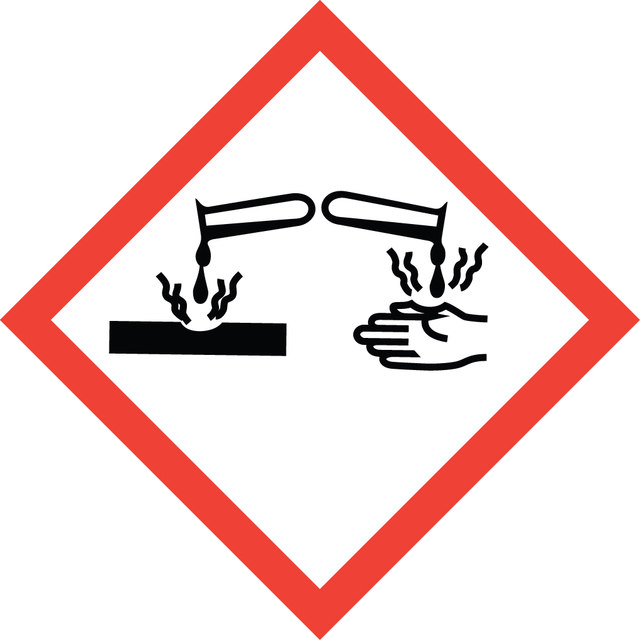
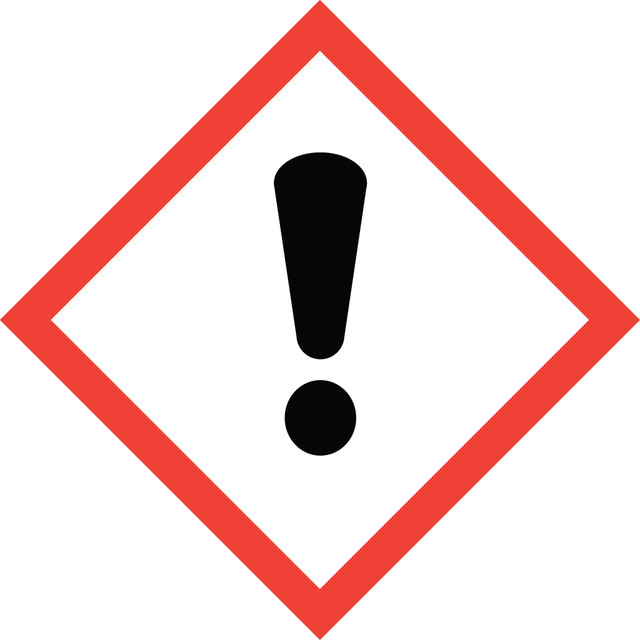
CorrosionExclamation mark

signalword

Danger

hcodes

Hazard Classifications

Acute Tox. 4 Oral - Skin Corr. 1A

Storage Class

8A - Combustible corrosive hazardous materials

wgk

WGK 1

flash_point_f

215.6 °F - closed cup

flash_point_c

102 °C - closed cup

ppe

Faceshields, Gloves, Goggles, type ABEK (EN14387) respirator filter

Regulatory Information

新产品
This item has

Choose from one of the most recent versions:

Certificates of Analysis (COA)

Lot/Batch Number

Don't see the Right Version?

If you require a particular version, you can look up a specific certificate by the Lot or Batch number.

Already Own This Product?

Find documentation for the products that you have recently purchased in the Document Library.

Visit the Document Library

Synthesis of well-defined cyclic poly (N-isopropylacrylamide) via click chemistry and its unique thermal phase transition behavior.
Xu J, et al.
Macromolecules, 40(25), 9103-9110 (2007)
Asymmetric reduction of 2-chloroacrylic acid to (S)-2-chloropropionic acid by a novel reductase from Burkholderia sp. WS.
Kurata A, et al.
Tetrahedron Asymmetry, 15(18), 2837-2839 (2004)
Synthesis of a new chitin derivative,(1-carboxyethyl) chitosan.
Shigemasa Y, et al.
Chemistry Letters (Jpn), 24(8), 623-624 (1995)
Takashi Nakamura et al.
Journal of computational chemistry, 30(16), 2625-2634 (2009-04-18)
L-2-haloacid dehalogenase (L-DEX) catalyzes the hydrolytic dehalogenation of L-2-haloalkanoic acids to produce the corresponding D-2-hydroxyalkanoic acids. This enzyme is expected to be applicable to the bioremediation of environments contaminated with halogenated organic compounds. We analyzed the reaction mechanism of L-DEX
O Myhre et al.
Journal of neuroscience research, 66(5), 992-997 (2001-12-18)
Oral administration of rats to L-2-chloropropionate (L-CPA) causes selective necrosis to the granule cell layer of the cerebellum in vivo and to cultured rat cerebellar granule cells in vitro. The present study was conducted to characterize the involvement of reactive

Our team of scientists has experience in all areas of research including Life Science, Material Science, Chemical Synthesis, Chromatography, Analytical and many others.

Contact Technical Service