Skip to Content
Merck
CN

107271

(±)-3-Chloro-1,2-propanediol

98%

Synonym(s):

α-Chlorohydrin, α-Glycerol chlorohydrin, α-Monochlorohydrin, 3-MCPD

Sign In to View Organizational & Contract Pricing.

Select a Size


About This Item

Linear Formula:
ClCH2CH(OH)CH2OH
CAS Number:
Molecular Weight:
110.54
UNSPSC Code:
12352100
NACRES:
NA.22
PubChem Substance ID:
EC Number:
202-492-4
Beilstein/REAXYS Number:
635684
MDL number:
Technical Service
Need help? Our team of experienced scientists is here for you.
Let Us Assist
Technical Service
Need help? Our team of experienced scientists is here for you.
Let Us Assist

Product Name

(±)-3-Chloro-1,2-propanediol, 98%

InChI key

SSZWWUDQMAHNAQ-UHFFFAOYSA-N

InChI

1S/C3H7ClO2/c4-1-3(6)2-5/h3,5-6H,1-2H2

SMILES string

OCC(O)CCl

vapor pressure

0.04 mmHg ( 25 °C)

assay

98%

refractive index

n20/D 1.480 (lit.)

bp

213 °C (lit.)

solubility

H2O: soluble
alcohol: soluble
diethyl ether: soluble

density

1.322 g/mL at 25 °C (lit.)

functional group

chloro
hydroxyl

Quality Level

Looking for similar products? Visit Product Comparison Guide

Application

(±)-3-Chloro-1,2-propanediol may be used in manufacture of dye intermediates.

Biochem/physiol Actions

3-Chloro-1,2-propanediol is a potent rodent chemosterilant.

General description

3-Chloro-1,2-propanediol undergoes enantioselective transformation to (R)-3-chloro-1,2-propanediol by the cell extract of Corynebacterium sp. strain N-1074 . It is a contaminant found in food in free (diol) form as well as in an esterified (with fatty acids) form.

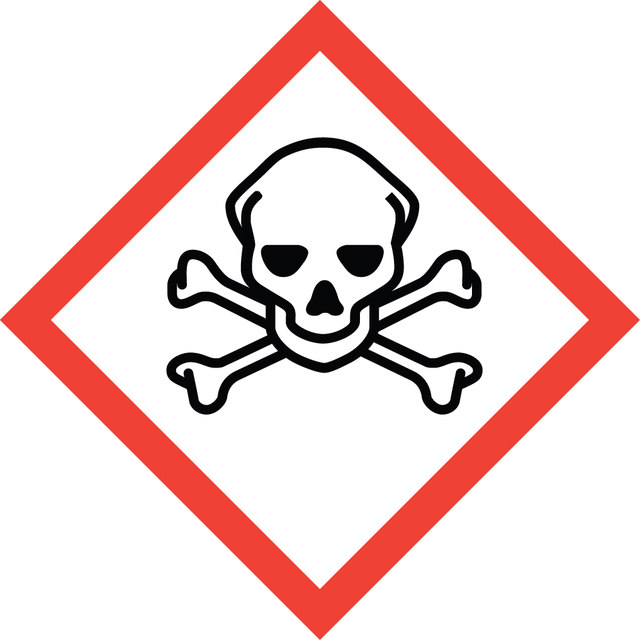
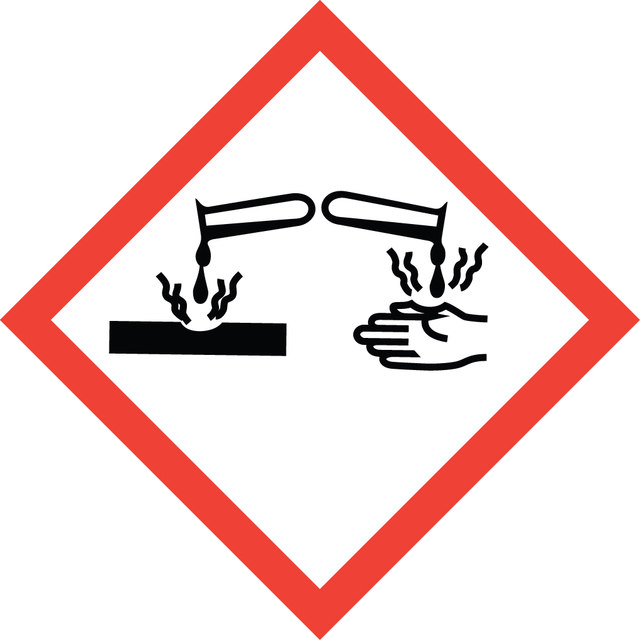
signalword

Danger

Hazard Classifications

Acute Tox. 2 Inhalation - Acute Tox. 3 Oral - Carc. 2 - Eye Dam. 1 - Met. Corr. 1 - Repr. 1B - Skin Irrit. 2 - STOT RE 1 - STOT SE 1

target_organs

Kidney, Testes

Storage Class

6.1A - Combustible acute toxic Cat. 1 and 2 / very toxic hazardous materials

wgk

WGK 3

flash_point_f

235.4 °F - closed cup

flash_point_c

113 °C - closed cup

ppe

Eyeshields, Faceshields, Gloves, type ABEK (EN14387) respirator filter

Regulatory Information

危险化学品
This item has

Choose from one of the most recent versions:

Certificates of Analysis (COA)

Lot/Batch Number

Don't see the Right Version?

If you require a particular version, you can look up a specific certificate by the Lot or Batch number.

Already Own This Product?

Find documentation for the products that you have recently purchased in the Document Library.

Visit the Document Library

T Nakamura et al.
Journal of bacteriology, 174(23), 7613-7619 (1992-12-01)
During the course of the transformation of 1,3-dichloro-2-propanol (DCP) into (R)-3-chloro-1,2-propanediol [(R)-MCP] with the cell extract of Corynebacterium sp. strain N-1074, epichlorohydrin (ECH) was transiently formed. The cell extract was fractionated into two DCP-dechlorinating activities (fractions Ia and Ib) and
Antifertility activity of 3-chloro-1, 2-propanediol (U-5897) on male rats.
E Samojlik et al.
Biology of reproduction, 2(2), 299-304 (1970-04-01)
W Seefelder et al.
Food additives & contaminants. Part A, Chemistry, analysis, control, exposure & risk assessment, 25(4), 391-400 (2008-03-19)
3-Mono-chloropropane-1,2-diol (3-MCPD) is a contaminant that occurs in food in its free (diol) form as well as in an esterified (with fatty acids) form. Using a simple intestinal model, it was demonstrated that 3-MCPD monoesters and 3-MCPD diesters are accepted
Z Zelinková et al.
Food additives & contaminants. Part A, Chemistry, analysis, control, exposure & risk assessment, 25(6), 669-676 (2008-05-20)
A series of twelve breast milk samples were analysed by gas chromatography-mass spectrometry (GC/MS) operated in selected ion monitoring mode for 3-chloropropane-1,2-diol (3-MCPD). Whilst none of the samples contained 3-MCPD above the limit of detection of 3 microg kg(-1) milk
Ching-Yu Lin et al.
Reproductive toxicology (Elmsford, N.Y.), 28(1), 75-80 (2009-06-06)
Sperm ATP is derived primarily from either glycolysis or mitochondrial oxidative phosphorylation. In the present studies, (1)H NMR spectroscopy was used to characterize the metabolite profile in primate sperm treated either with alpha-chlorohydrin (ACH), a known inhibitor of sperm glycolysis

Our team of scientists has experience in all areas of research including Life Science, Material Science, Chemical Synthesis, Chromatography, Analytical and many others.

Contact Technical Service