
106003

2,3-Dibromopropene
80%, technical grade
Synonym(s):
(2-Bromo-2-propenyl) bromide, 2,3-Dibromopropylene
Sign In to View Organizational & Contract Pricing.
Select a Size
About This Item
Linear Formula:
CH2BrCBr=CH2
CAS Number:
Molecular Weight:
199.87
UNSPSC Code:
12352100
NACRES:
NA.22
PubChem Substance ID:
EC Number:
208-155-8
Beilstein/REAXYS Number:
878169
MDL number:
Assay:
80%
InChI key
YMFWYDYJHRGGPF-UHFFFAOYSA-N
InChI
1S/C3H4Br2/c1-3(5)2-4/h1-2H2
SMILES string
BrCC(Br)=C
grade
technical grade
assay
80%
refractive index
n20/D 1.544 (lit.)
bp
42-44 °C/17 mmHg (lit.)
density
2.045 g/mL at 25 °C
functional group
bromo
Quality Level
Related Categories
General description
2,3-Dibromopropene is an intermediate formed during the hydrolysis of nematocide:1,2-dibromo-3-chloropropane.
Application
2,3-Dibromopropene was used to test 2- and 3-carbon halogenated hydrocarbons for mutagenicity for Salmonella typhimurium strain TA 100 . It was used in the synthesis of N(Boc)-L-(2-Bromoallyl)-glycine.
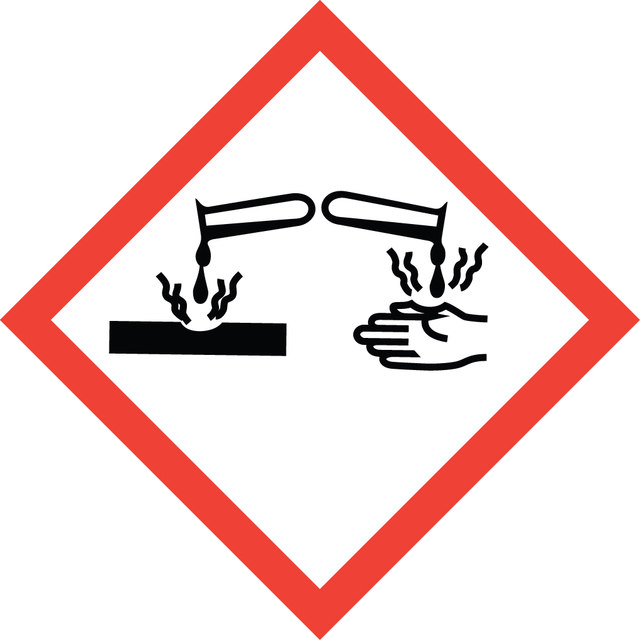

signalword
Danger
hcodes
Hazard Classifications
Acute Tox. 4 Inhalation - Acute Tox. 4 Oral - Eye Dam. 1
Storage Class
10 - Combustible liquids
wgk
WGK 3
flash_point_f
177.8 °F - closed cup
flash_point_c
81 °C - closed cup
ppe
Eyeshields, Faceshields, Gloves, type ABEK (EN14387) respirator filter
Choose from one of the most recent versions:
Already Own This Product?
Find documentation for the products that you have recently purchased in the Document Library.
S J Stolzenberg et al.
Environmental mutagenesis, 2(1), 59-66 (1980-01-01)
Short-chain, 2- and 3- carbon halogenated hydrocarbons were tested for mutagenicity for Salmonella typhimurium strain TA 100 both with and without the presence of S-9. Without exception, all brominated derivatives were more mutagenic than the chlorinated derivatives, usually by a
Kinetics and products of hydrolysis of 1,2-dibromo-3-chloropropane.
N E Burlinson et al.
Environmental science & technology, 16(9), 627-632 (1982-09-01)
N-(Boc)-L-(2-Bromoallyl)-glycine: a versatile intermediate for the synthesis of optically active unnatural amino acids.
Leanna MR and Morton HE.
Tetrahedron Letters, 34(28), 4485-4488 (1993)
Gerald Pratsch et al.
The Journal of organic chemistry, 80(22), 11388-11397 (2015-10-31)
Visible-light photoreductive coupling of 2-arylallyl bromides in the presence of the photocatalyst Ru(bpy)3(PF6)2, a Hantzsch ester, and i-Pr2NEt gives 2,5-diaryl-1,5-dienes in high yield. This method avoids the use of stoichiometric metal reductants and is compatible with the presence of halogen
Our team of scientists has experience in all areas of research including Life Science, Material Science, Chemical Synthesis, Chromatography, Analytical and many others.
Contact Technical Service