Skip to Content
Merck
CN

103594

1-Nitronaphthalene

99%

Sign In to View Organizational & Contract Pricing.

Select a Size


About This Item

Empirical Formula (Hill Notation):
C10H7NO2
CAS Number:
Molecular Weight:
173.17
UNSPSC Code:
12352100
NACRES:
NA.22
PubChem Substance ID:
EC Number:
201-684-5
Beilstein/REAXYS Number:
1867714
MDL number:
Assay:
99%
Form:
solid
Technical Service
Need help? Our team of experienced scientists is here for you.
Let Us Assist
Technical Service
Need help? Our team of experienced scientists is here for you.
Let Us Assist

mp

53-57 °C (lit.)

solubility

H2O: insoluble, alcohol: soluble, carbon disulfide: freely soluble, chloroform: soluble, diethyl ether: freely soluble

density

1.223 g/mL at 25 °C (lit.)

InChI key

RJKGJBPXVHTNJL-UHFFFAOYSA-N

InChI

1S/C10H7NO2/c12-11(13)10-7-3-5-8-4-1-2-6-9(8)10/h1-7H

SMILES string

[O-][N+](=O)c1cccc2ccccc12

assay

99%

form

solid

bp

304 °C (lit.)

Quality Level

Looking for similar products? Visit Product Comparison Guide

Related Categories

General description

1-Nitronaphthalene is a mutagenic nitroaromatic compound present in diesel exhaust and it causes acute liver and lung toxicity in rodents. 1-Nitronaphthalene is a cytochrome P450-bioactivated, nonciliated bronchiolar epithelial (Clara) cell cytotoxicant .

Application

1-Nitronaphthalene was used to study excited state dynamics of 1-nitropthalene in nonpolar, aprotic and protic solvents.

Biochem/physiol Actions

1-Nitronaphthalene binds covalently to protein and forms adducts in the rat airway epithelium in vivo.

signalword

Warning

Hazard Classifications

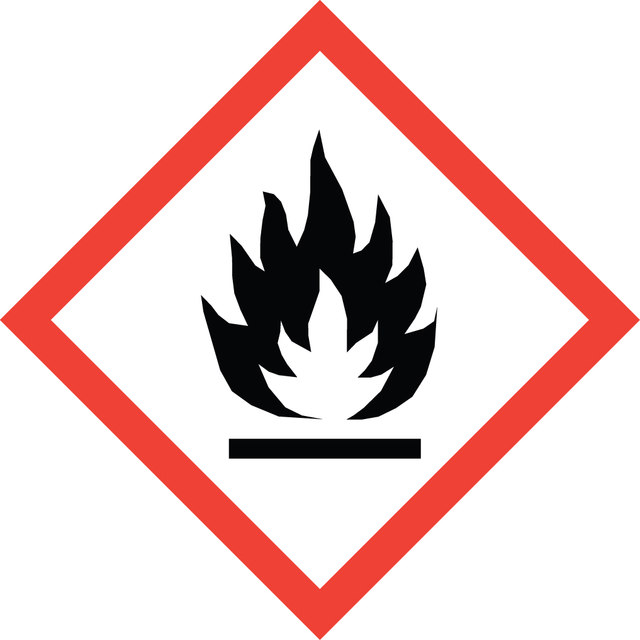
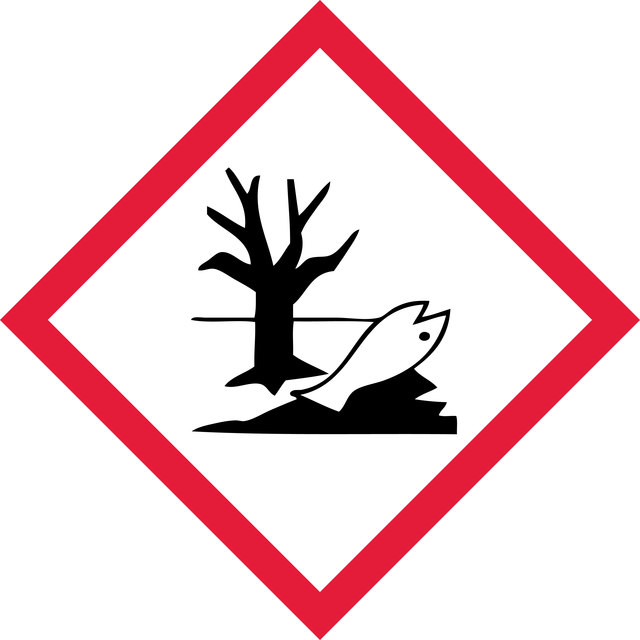
Acute Tox. 4 Oral - Aquatic Chronic 2 - Flam. Sol. 2

Storage Class

4.1B - Flammable solid hazardous materials

wgk

WGK 2

flash_point_f

Not applicable

flash_point_c

Not applicable

ppe

Eyeshields, Faceshields, Gloves, type P3 (EN 143) respirator cartridges

Regulatory Information

危险化学品
This item has

Choose from one of the most recent versions:

Certificates of Analysis (COA)

Lot/Batch Number

Don't see the Right Version?

If you require a particular version, you can look up a specific certificate by the Lot or Batch number.

Already Own This Product?

Find documentation for the products that you have recently purchased in the Document Library.

Visit the Document Library

Christian Reichardt et al.
The Journal of chemical physics, 131(22), 224518-224518 (2009-12-17)
The electronic energy relaxation of 1-nitronaphthalene was studied in nonpolar, aprotic, and protic solvents in the time window from femtoseconds to microseconds. Excitation at 340 or 360 nm populates the Franck-Condon S(1)(pipi( *)) state, which is proposed to bifurcate into
J M Sauer et al.
Toxicology letters, 90(1), 19-27 (1997-01-15)
1-Nitronaphthalene is a mutagenic particulate of diesel exhaust which causes acute liver and lung toxicity in rodents. The studies presented here describe morphological changes in the lung and liver at several time intervals following a single injection of 1-nitronaphthalene (100
K el-Bayoumy et al.
Carcinogenesis, 6(4), 505-507 (1985-04-01)
A method was developed for the analysis of 1-nitronaphthalene, 1-nitropyrene, and 6-nitrochrysene in mainstream cigarette smoke, using [14C]1-nitronaphthalene, [14C]1-nitropyrene, and [14C]6-nitrochrysene as tracers and internal standards. Cigarette smoke condensate was collected and the appropriate fractions containing the labelled standards were
Ching Yu Lin et al.
Proteomics, 6(3), 972-982 (2006-02-03)
Naphthalene and 1-nitronaphthalene are ambient air pollutants, which undergo P450-dependent bioactivation in the lung. Reactive metabolites of naphthalene and 1-nitronaphthalene covalently bind to proteins, and the formation of covalent adducts correlates with airway epithelial cell injury in rodent models. These
Gregory L Baker et al.
Toxicological sciences : an official journal of the Society of Toxicology, 77(1), 135-141 (2003-11-06)
The mechanisms of toxicant-mediated lung injury and repair are influenced by the considerable spatial heterogeneity that exists within the conducting airways of the lungs. As a result of this heterogeneity, significant differences and similarities in gene expression are observed throughout

Our team of scientists has experience in all areas of research including Life Science, Material Science, Chemical Synthesis, Chromatography, Analytical and many others.

Contact Technical Service