Skip to Content
Merck
CN

102253

2,5-Dimethylaniline

99%

Synonym(s):

2,5-Xylidine, 2-Amino-1,4-dimethylbenzene, 2-Amino-p-xylene

Sign In to View Organizational & Contract Pricing.

Select a Size


About This Item

Linear Formula:
(CH3)2C6H3NH2
CAS Number:
Molecular Weight:
121.18
UNSPSC Code:
12352100
NACRES:
NA.22
PubChem Substance ID:
EC Number:
202-451-0
Beilstein/REAXYS Number:
2205178
MDL number:
Assay:
99%
Technical Service
Need help? Our team of experienced scientists is here for you.
Let Us Assist
Technical Service
Need help? Our team of experienced scientists is here for you.
Let Us Assist

refractive index

n20/D 1.559 (lit.)

bp

218 °C (lit.)

mp

11.5 °C (lit.)

density

0.973 g/mL at 25 °C (lit.)

InChI key

VOWZNBNDMFLQGM-UHFFFAOYSA-N

InChI

1S/C8H11N/c1-6-3-4-7(2)8(9)5-6/h3-5H,9H2,1-2H3

SMILES string

Cc1ccc(C)c(N)c1

assay

99%

Quality Level

Related Categories

General description

2,5-Dimethylaniline is a colorless to dark yellow and colorless to brown liquid. It is a substrate for fungal laccases. 2,5-Dimethylaniline undergoes electrochemical oxidation in anhydrous NH4F·2.35 HF medium to form conducting polymer, poly(2,5-dimethylaniline). Poly(2,5-dimethylaniline) coating on copper substrate protects the Cu against corrosion. The Fourier transform infrared (FTIR) and Raman spectra of 2,5-dimethylaniline was studied. It induced transcription of lccIV.

Application

2,5-Dimethylaniline was used in the synthesis of nanocomposite of multi-walled carbon nanotubes embedded in poly(2,5-dimethylaniline). 2,5-Dimethylaniline was used to study the effect of metabolites formed from 2,5-xylidine by fungi on laccase activity.

signalword

Danger

Hazard Classifications

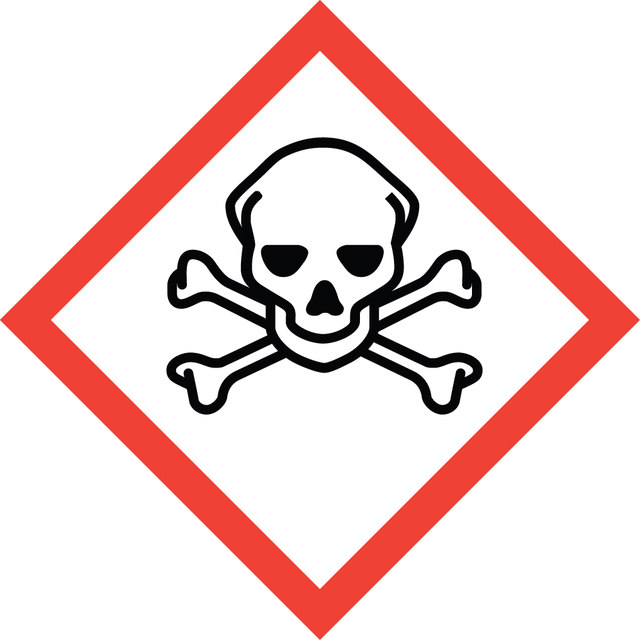
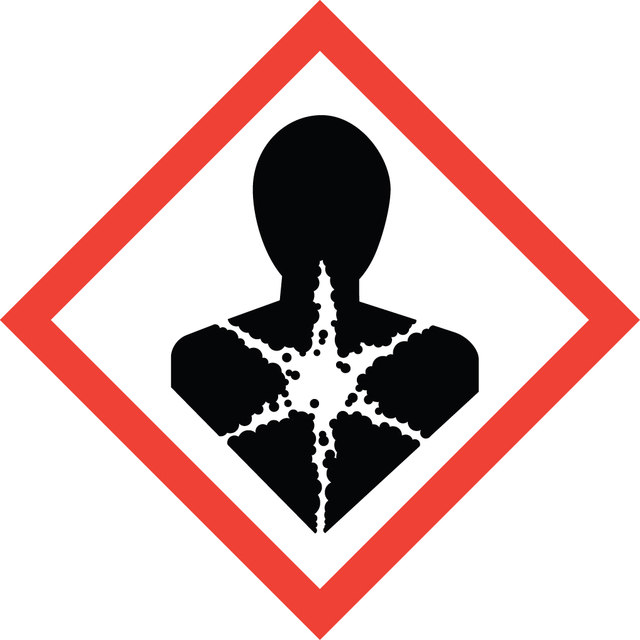
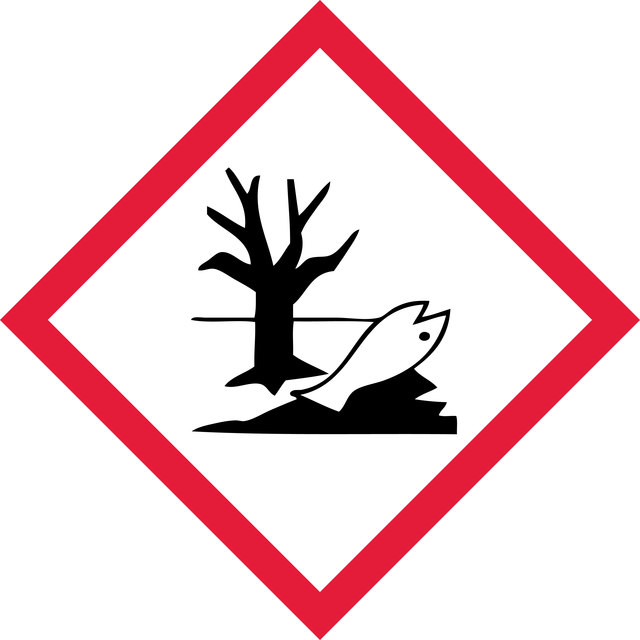
Acute Tox. 3 Dermal - Acute Tox. 3 Inhalation - Acute Tox. 3 Oral - Aquatic Chronic 2 - STOT RE 2

Storage Class

6.1A - Combustible acute toxic Cat. 1 and 2 / very toxic hazardous materials

wgk

WGK 3

flash_point_f

204.8 °F - closed cup

flash_point_c

96 °C - closed cup

ppe

Eyeshields, Faceshields, Gloves, type ABEK (EN14387) respirator filter

Regulatory Information

危险化学品
This item has

Choose from one of the most recent versions:

Certificates of Analysis (COA)

Lot/Batch Number

Don't see the Right Version?

If you require a particular version, you can look up a specific certificate by the Lot or Batch number.

Already Own This Product?

Find documentation for the products that you have recently purchased in the Document Library.

Visit the Document Library

Poly (2, 5-dimethylaniline)-MWNTs nanocomposite: a new material for conductometric acid vapours sensor.
Bavastrello V, et al.
Sensors and Actuators B, Chemical, 98(2), 247-253 (2004)
Oxidation of 2, 5-dimethylaniline in NH 4 F? 2.35 HF medium Characteristics of the resulting conducting polymer.
Genies EM and Noel P.
J. Electroanal. Chem. Interfac. Electrochem., 296(2), 473-490 (1990)
Luane Ferreira Garcia et al.
Chemosphere, 186, 519-526 (2017-08-16)
The bioremediation and electro-oxidation (EO) processes are included among the most promising cleaning and decontamination mechanisms of water. The efficiency of bioremediation is dictated by the biological actuator for a specific substrate, its suitable immobilization and all involved biochemical concepts.
Synthesis and characterization of corrosion protective poly (2, 5-dimethylaniline) coatings on copper.
Shinde V, et al.
Applied Surface Science, 253(3), 1037-1045 (2006)
Thomas Bertrand et al.
Biochemistry, 41(23), 7325-7333 (2002-06-05)
Laccases are multicopper oxidases that catalyze the oxidation of a wide range of phenols or arylamines, and their use in industrial oxidative processes is increasing. We purified from the white rot fungus Trametes versicolor a laccase that exists as five

Our team of scientists has experience in all areas of research including Life Science, Material Science, Chemical Synthesis, Chromatography, Analytical and many others.

Contact Technical Service