Skip to Content
Merck
CN

101915

2,4-Diaminotoluene

98%

Synonym(s):

4-Methyl-m-phenylenediamine, 2,4-Diaminotoluene, 2,4-Toluenediamine, 4-Methyl-1,3-phenylenediamine

Sign In to View Organizational & Contract Pricing.

Select a Size


About This Item

Linear Formula:
CH3C6H3(NH2)2
CAS Number:
Molecular Weight:
122.17
UNSPSC Code:
12162002
NACRES:
NA.23
PubChem Substance ID:
EC Number:
202-453-1
Beilstein/REAXYS Number:
2205839
MDL number:
Technical Service
Need help? Our team of experienced scientists is here for you.
Let Us Assist
Technical Service
Need help? Our team of experienced scientists is here for you.
Let Us Assist

SMILES string

Cc1ccc(N)cc1N

InChI key

VOZKAJLKRJDJLL-UHFFFAOYSA-N

InChI

1S/C7H10N2/c1-5-2-3-6(8)4-7(5)9/h2-4H,8-9H2,1H3

assay

98%

form

solid

bp

283-285 °C (lit.)

mp

97-99 °C (lit.)

Quality Level

Looking for similar products? Visit Product Comparison Guide

Application

  • Employing UV/H2O2 process for degradation of 2, 4-Diaminotoluene in synthetic wastewater: This study explores the degradation of carcinogenic Toluene-2, 4-diamine in synthetic wastewater using the UV/H2O2 process, highlighting its potential for improving water treatment methods (J Hosseini, A Shokri, 2017).
  • Development of magnetic, ferrite supported palladium catalysts for 2, 4-dinitrotoluene hydrogenation: The paper discusses the use of Pd/NiFe2O4 catalyst for efficient hydrogenation of 2,4-dinitrotoluene to 2,4-diaminotoluene, demonstrating a high yield and potential for industrial applications (V Hajdu, M Varga, G Muránszky, G Karacs, 2021).
  • Synthesis, characterisation and energetic performance of insensitive energetic salts formed between picric acid and 2, 3-diaminotoluene, 2, 4-diaminotoluene: This paper presents the synthesis and characterization of new energetic materials, which could be significant for the development of safer explosives and pyrotechnic devices (N Şen, H Nazir, N Atҫeken, KS Hope, N Acar, 2020).
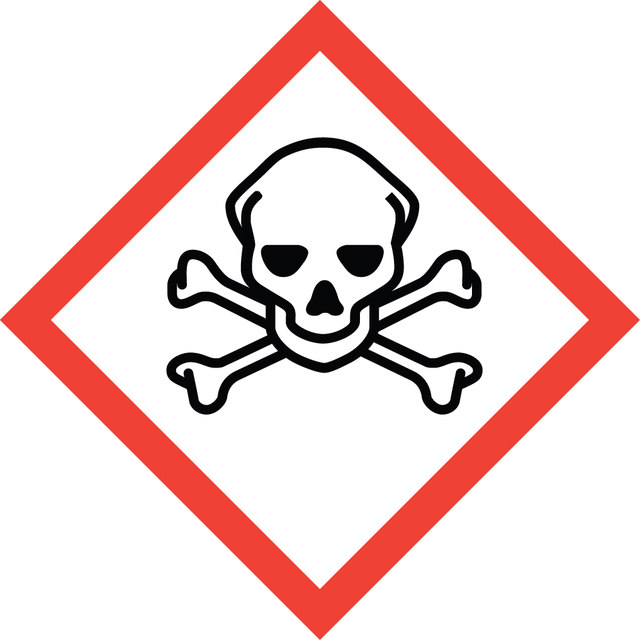

signalword

Danger

Hazard Classifications

Acute Tox. 3 Dermal - Acute Tox. 3 Oral - Aquatic Acute 1 - Aquatic Chronic 2 - Carc. 1B - Muta. 2 - Repr. 2 - Skin Sens. 1 - STOT RE 2

target_organs

Liver,Kidney

Storage Class

6.1C - Combustible acute toxic Cat.3 / toxic compounds or compounds which causing chronic effects

wgk

WGK 3

flash_point_f

320.0 °F - closed cup

flash_point_c

160 °C - closed cup

ppe

Eyeshields, Faceshields, Gloves, type P3 (EN 143) respirator cartridges

Regulatory Information

危险化学品
This item has

Choose from one of the most recent versions:

Certificates of Analysis (COA)

Lot/Batch Number

Don't see the Right Version?

If you require a particular version, you can look up a specific certificate by the Lot or Batch number.

Already Own This Product?

Find documentation for the products that you have recently purchased in the Document Library.

Visit the Document Library

Isabelle Séverin et al.
Toxicology, 213(1-2), 138-146 (2005-07-06)
2,4-Diaminotoluene (2,4-DAT) is a widely used industrial intermediate and human exposure is possible in the dye and plastics industries. We investigated the genotoxicity of the environmental pollutant, 2,4-DAT, in human HepG2 cells using the unscheduled DNA synthesis (UDS) test, the
Laura Dill Morton et al.
Toxicologic pathology, 30(5), 559-564 (2002-10-10)
This study examined the response of the Eker rat to nephrotoxic compounds and to genotoxic nonrenal carcinogens. Groups of male Eker rats received either no treatment; a vehicle treatment; treatment with a noncarcinogenic nephrotoxin (aluminum nitrilotriacetate, 2 mg/kg/day of aluminum
Naomi Toyoda-Hokaiwado et al.
Toxicological sciences : an official journal of the Society of Toxicology, 114(1), 71-78 (2009-12-23)
An important trend in current toxicology is the replacement, reduction, and refinement of the use of experimental animals (the 3R principle). We propose a model in which in vivo genotoxicity and short-term carcinogenicity assays are integrated with F344 gpt delta
Shaun Austin
Occupational medicine (Oxford, England), 57(6), 444-448 (2007-08-31)
Toluene diisocyanate (TDI) is used in industry in the production of flexible polyurethane foam, commonly a mixture of the 2,4- and 2,6- isomers. The production process may lead to exposure to diisocyanates which are associated with respiratory disease. A method
Tadashi Sakai et al.
International archives of occupational and environmental health, 78(6), 459-466 (2005-05-27)
To develop a simple and sensitive GC-MS method for determining toluene-diamine (TDA) in urine and to apply the method for biological monitoring of workers exposed to toluene-diisocyanate (TDI). After acid hydrolysis of 0.1 ml of urine, diluted tenfold with water

Our team of scientists has experience in all areas of research including Life Science, Material Science, Chemical Synthesis, Chromatography, Analytical and many others.

Contact Technical Service