
Reliable PFAS Monitoring and Analysis of Air Emissions With a Purified XAD® Resin
Abstract
Supelpak™-2 4PFAS resin effectively supports measurement of PFAS air emissions, demonstrating low background contamination and high recovery rates. Its reliable performance enhances analytical efficiency, positioning it as an essential tool for environmental monitoring and regulatory compliance in PFAS analysis.
Section Overview
Introduction
Supelpak™-2 4PFAS is a cleaned and pretested XAD™-2 resin specifically designed for the effective measurement of per- and polyfluoroalkyl substances (PFAS) emissions. This resin was developed under MilliporeSigma’s Design for Sustainability (DfS) framework, and is manufactured with a lower environmental impact (DfS product scorecard available)1. The resin targets PFAS background contamination, making it ready to use off-the-shelf, eliminating the need for laborious cleaning by the client prior to field use. This feature not only saves time but also reduces costs for laboratories conducting PFAS analyses.
As a critical component of the Other Test Method 45 (OTM-45)2, released by the EPA's Emission Measurement Center, Supelpak™-2 4PFAS outperforms other grades of XAD™-2 resins on the market due to the lower PFAS background levels.
The resin pretreatment underwent stringent development utilizing a proprietary cleaning method ensuring suitability for accurate and reliable PFAS testing (see Certificate of Analysis for cleanliness reporting levels available on product page). External testing is performed with each lot from a credited environmental laboratory to ensure suitability. Background and recovery testing have confirmed its effectiveness in capturing and releasing PFAS compounds, aligning with OTM-45's performance criteria. Early adopters have praised Supelpak™-2 4PFAS for its convenience, with one technical director noting that it allows for immediate use without additional preparation.
By integrating Supelpak™-2 4PFAS into the framework of OTM-45, laboratories can ensure consistency and reliability in their emission monitoring, contributing to a better understanding and management of PFAS emissions in various environments.
Experimental
In the evaluation of Supelpak™-2 4PFAS, two different methods of extraction were used by operators at Pacific Rim Laboratories: dispersive extraction via a shaking table and accelerated solvent extraction (ASE). The target analytes in these studies were from EPA method 16333, which contains 5 fewer compounds compared to the full OTM-45 list.
The first method closely followed the original OTM-45 method (rev 0). Five samples of 20 g each were prepared and spiked with an extractable internal standard (EIS, 24 mass-labeled PFAS compounds 250-5000 ng/mL) to ensure extraction efficiency. Two of these samples were spiked with target analytes at 5-100 ng/g to demonstrate recovery (A). The remaining three samples were left un-spiked to demonstrate the background cleanliness of the resin (B). The extraction process utilized two 18-hour extractions with 180 mL of 5% ammonium hydroxide in methanol, for a final extraction volume of 360 mL (Table 1, Method 1).
The second method for recovery testing employed a modified OTM-45 protocol that utilized accelerated solvent extraction (ASE) to enhance extraction efficiency. Three samples of 20 g Supelpak™-2 4PFAS were spiked with the same analytes at 0.5-10 ng/g and were extracted with 40 mL of 5% ammonium hydroxide in methanol (Table 1, Method 2).
Following extraction, all samples were condensed to a final volume of 2 mL and analyzed using LC-MS/MS (Table 2) utilizing superficially porous particle (SPP) columns. The first column, a delay column with C18 modification, was installed inline after the solvent pump but before the injector to mitigate background PFAS from the LC-system to ensure optimal performance (recommendation: Ascentis® Express 160 Å PFAS Delay 53572-U). This effectively delays PFAS contaminants originating from the system from attributing to the analysis of samples. The second column, an analytical column 150 x 2.1 mm with C18 modified 2.7 µm SPP, was employed for the separation of the target analytes (recommendation: Ascentis® Express 90 Å PFAS 53560-U). This comprehensive approach assessed the extraction efficiency and recovery of Supelpak™-2 4PFAS and ensured alignment with the regulatory frameworks of OTM-45, thereby enhancing the reliability and applicability of the results.
EIS Recovery from Methods 1 and 2
The extractable internal standard (EIS) recoveries for the various conditions investigated are displayed in Figures 1, 2 and 3. Expected recoveries outlined in the OTM-45 are between 20-200%.
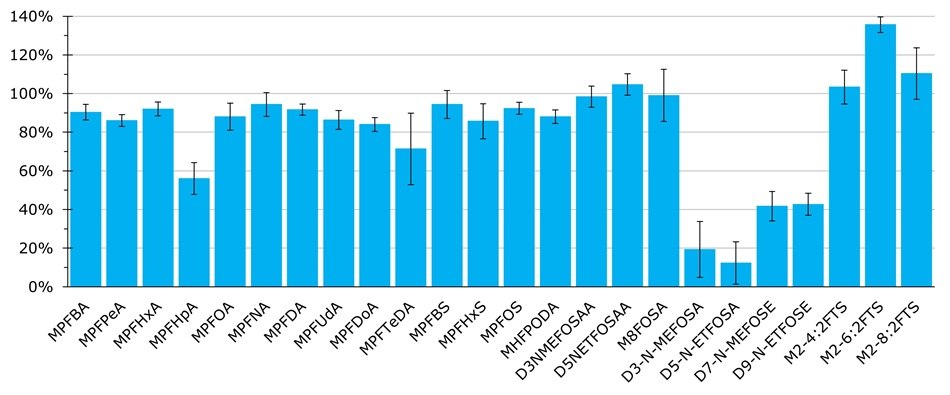
Figure 1.Average recovery for each extracted internal standard (EIS) from unspiked sample extracted using the shaking table technique (Method 1, B) without adding the 40 PFA analytes, n=3.
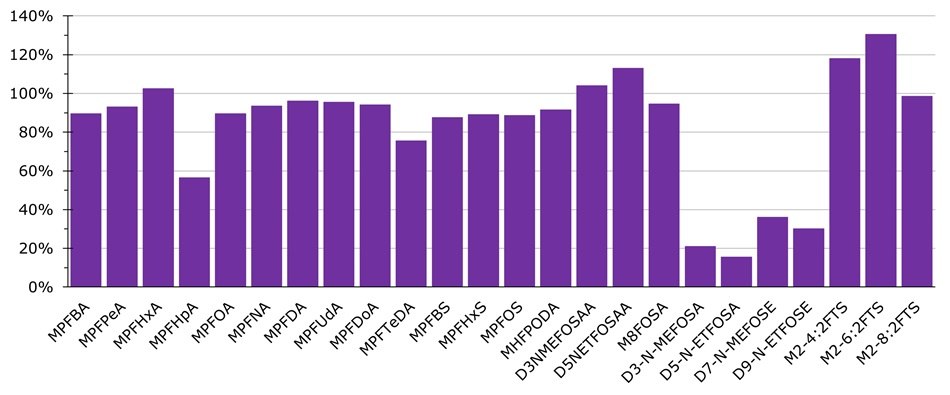
Figure 2.Average recovery for each extracted internal standard (EIS) from spiked sample extracted using the shaking table technique (Method 1, A) with adding the 40 PFAS analytes, n=2.
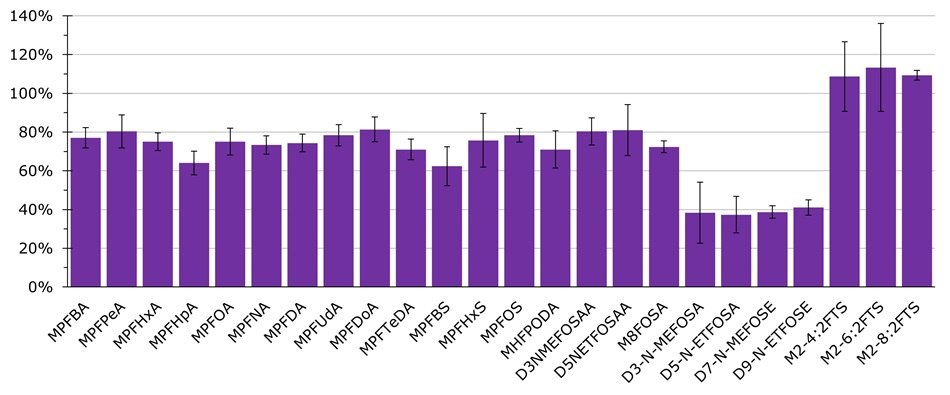
Figure 3.Average recovery for each extracted internal standard (EIS) from spiked sample extracted using the accelerated solvent extraction (ASE) technique (Method 2) adding the 40 PFAS analytes, n=3.
PFAS Analyte Recoveries using Supelpak™-2 4PFAS via Method 1 and 2
The average recoveries of the method analytes are displayed in Figures 4 and 5. The recoveries reported are relative between the native compound and the corresponding EIS compound as outlined by OTM-45.
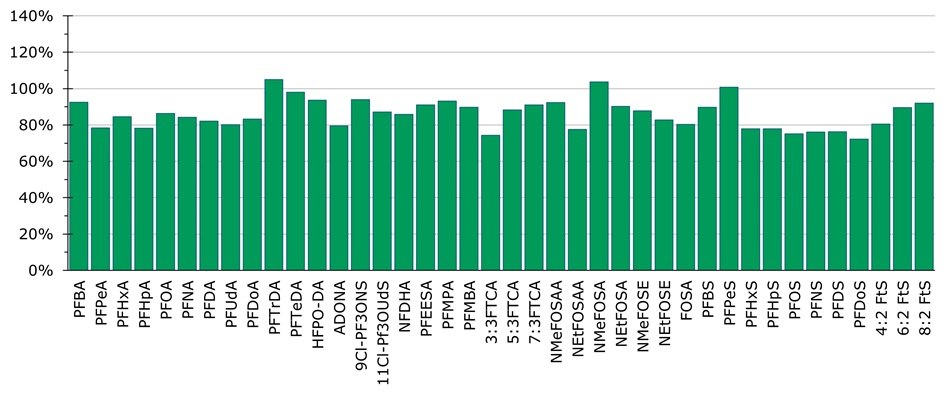
Figure 4.Average relative recovery for each PFAS extracted using the shaking table technique (method 1), n=2.
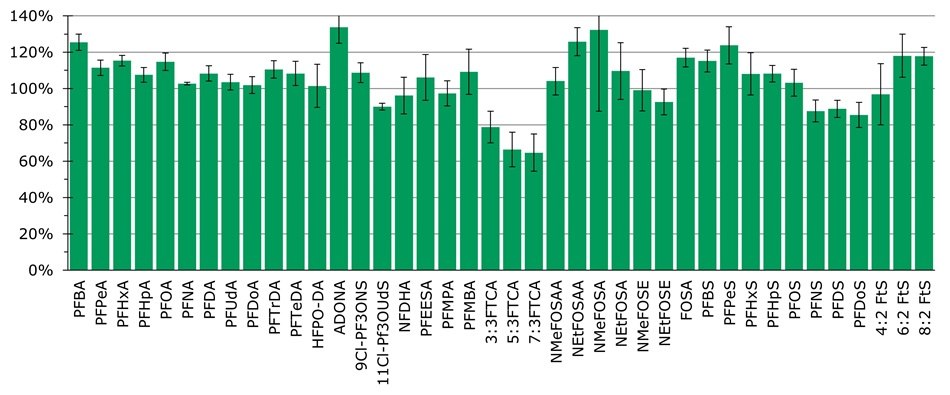
Figure 5.Average relative recovery for each PFAS extracted via ASE technique (Method 2), n=3.
Discussion
The evaluation of Supelpak™-2 4PFAS resin yielded compelling results that underscore its effectiveness in measuring PFAS across various applications. The data demonstrates that the resin meets the performance expectations set forth by OTM-45, making it an asset in the analytical toolkit for environmental PFAS monitoring. The recovery rates for the PFAS compounds were consistently good, with perfluorobutanoic acid (PFBA) achieving an average recovery of 125% and perfluorooctanoic acid (PFOA) at 115% (PFBA being one of the shortest and PFOA one of the longest, both being key PFAS targets). These results indicate that the Supelpak™-2 4PFAS resin effectively captures and releases these compounds, which is critical for accurate quantification in environmental samples. The low relative standard deviations (RSDs), such as 3.5% for PFBA and 4.2% for PFOA, further demonstrate the repeatability and reliability of the resin, suggesting it can produce consistent results across multiple analyses.
However, it is important to note that NMeFOSA and NEtFOSA, as neutral compounds, often exhibit recoveries below 20% in analytical methods. This low recovery can be attributed primarily to two factors: their relatively high volatility compared to other PFAS compounds, which leads to losses during evaporation or drying steps involving heat, and their unique properties, which result in lower expected recovery ranges in standardized methods. For example, some guidance documents indicate a wider recovery range for these analytes compared to that of other PFAS compounds. These challenges highlight the need for method optimization when analyzing these specific compounds to improve recovery rates and ensure accurate quantification.
For the analytes assessed in the evaluation of the blank matrix, results were consistently below limits of detection, indicating that no background contamination was observed. This is consistent with results obtained from other evaluators as well (results not shown here).
Conclusion
The evaluation of Supelpak™-2 4PFAS resin demonstrates its robust performance as a reliable tool for measuring per- and polyfluoroalkyl substances (PFAS) in emissions and air sampling. The resin effectively captures a wide range of PFAS compounds, making it an asset for accurate quantification in environmental monitoring.
The absence of background contamination observed during testing highlights a key feature of being ready-to-use directly from the bottle. This characteristic streamlines the analytical process, saves time, and enhances the overall reliability of PFAS measurements.
The Supelpak™-2 4PFAS is an essential tool for laboratories engaged in environmental analysis for PFAS emissions or exposure. Its seamless integration into existing methodologies supports regulatory compliance and contributes to ongoing efforts in public health and environmental protection. Continued research and development will further expand and optimize its application to address the evolving challenges posed by PFAS contamination.
See more information on our offering for PFAS testing.
Explore our current PFAS reference materials.
Related Products
Sample Preparation and HPLC Columns
Solvents, Reagents, and Accessories
References
To continue reading please sign in or create an account.
Don't Have An Account?