Photometric Determination of Calcium in Soil Using Glyoxal-bis (2-hydroxyanil)
Introduction
Soil analysis of calcium is important due to its role as an essential plant nutrient required for normal growth and development. Calcium is involved in key biological processes, including cell growth, membrane stability, and intracellular signaling.1 Deficiency of calcium can result in impaired development, including cell damage and physiological disorders. In soils, calcium availability is influenced by soil pH, with acidification affecting nutrient access and crop performance.1 Reliable determination of calcium is therefore required to evaluate soil status under varying conditions.
Colorimetric methods based on complex formation have been proposed for the detection and determination of calcium, although their performance may depend on reaction conditions such as pH and reagent stability.
Experimental
This application note details the photometric determination of calcium in soils, using Glyoxal-bis (2-hydroxyanil), after its extraction.
Method
In alcoholic-alkaline solution calcium ions react with modified glyoxal-bis(2-hydroxyanil) to form a red-violet complex that is determined photometrically.
Measuring Range
Applicable Sample
Soil samples
Reagents, Instruments, and Materials
Test /Reagent Kit(s)
For the measurement the following Spectroquant® test kit is necessary.
- Spectroquant® Calcium Test Kit (1.14815)
Instrument(s) & Devices
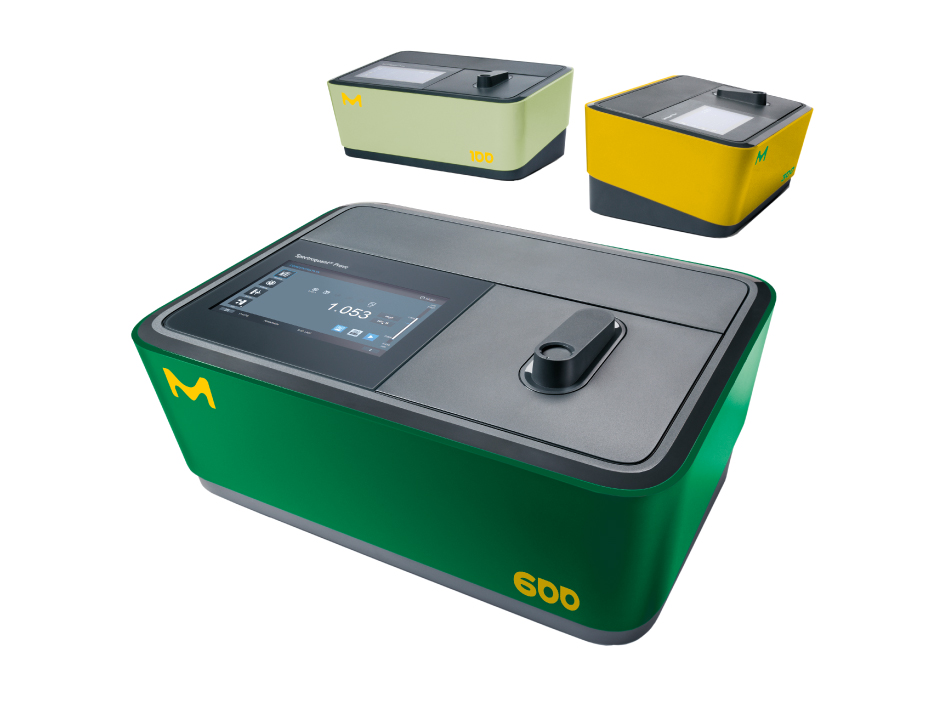
For the measurement one of the following Spectroquant® photometers is necessary:
- Spectroquant® VIS Spectrophotometer Prove 100 plus (1.73026)
- Spectroquant® UV/VIS Spectrophotometer Prove 300 plus (1.73027)
- Spectroquant® UV/VIS Spectrophotometer Prove 600 plus (1.73028)
- Spectroquant® Colorimeter Move 100 (1.73632)
Note: Also, legacy Spectroquant® instruments are suitable.
Software for Data Transfer
Optional Spectroquant® Prove Connect to LIMS software package (Y.11086) to transfer your data into an existing LIMS system.
Instrument Accessories
Other Reagents and Accessories
- Hydrochloric acid 25 % for analysis (1.00316)
- Hydrochloric acid 1 mol/L for analysis (1.09970)
- Sodium hydroxide solution 10 % for analysis (1.05588)
- MQuant® pH-Indicator strips pH 0 – 6 (1.09531)
- Water for analysis (1.16754)
- Analytical balance
- Standard laboratory glassware (e.g., glass beakers) and pipettes
- Sieve
- Polyethylene bag
- Heating plate
- pH-meter
- Folded filter
Analytical Procedure
For more information on the measurement see the packaging insert for the test.
Sample Preparation
- In an Erlenmeyer flask mix 10 g of air-dry, finely-ground, stone-free material with 50 mL hydrochloric acid 1 mol/L and held at a gentle boil for 5 minutes on a heating plate. The pH range of the supernatant solution should be 1 - 3 (test with pH-indicator strips). If necessary, adjust by using hydrochloric acid 25 %.
- Heat the material once again, for a few minutes.
- After cooling, adjust the mixture to pH 7 - 7.5 using a pH-meter by adding sodium hydroxide solution 10 %.
- Transfer the suspension, with water for analysis, into a 1000-mL volumetric flask, fill up to the mark with water for analysis, and mix.
Procedure Measuring Rnge 1.0 - 15.0 mg/L Ca:
- Pipette 0.50 mL Pretreated sample into a test tube.
- Add 5.0 mL Reagent Ca-1 with pipette and mix.
- Add 4 drops Reagent Ca-2 and mix. Hold the bottle vertically while adding the reagent!
- Add 4 drops Reagent Ca-3 and mix. Hold the bottle vertically while adding the reagent!
- Leave to stand for exactly 8 min (reaction time), then fill the sample into a 10-mm cell, and measure in the photometer.
Procedure Measuring Range 5 - 160.0 mg/L Ca:
- Pipette 0.10 mL Pretreated sample into a test tube.
- Add 5.0 mL Reagent Ca-1 with pipette and mix.
- Add 4 drops Reagent Ca-2 and mix. Hold the bottle vertically while adding the reagent!
- Add 4 drops Reagent Ca-3 and mix. Hold the bottle vertically while adding the reagent!
- Leave to stand for exactly 8 min (reaction time), then fill the sample into a 10-mm cell, and measure in the photometer.
Measurement
- Certain photometers may require a blank (preparation as per measurement sample, but with distilled water instead of sample).
- For photometric measurement the cells must be clean. Wipe, if necessary, with a clean dry cloth.
- Measurement of turbid solutions yields false-high readings.
- The pH of the measurement solution must be above 12.
- The color of the measurement solution remains stable for only a short time after the end of the reaction time stated above. (After 10 min the measurement value would have diminished by 5%, after 30 min by 25%).
Hints for Measurement
- It is recommended to zero the method for each new working day. To do this, open the method by inserting the barcode, tap the <Settings> button and select the <ZERO ADJUSTMENT> menu item. Fill the same cell which will be used for the sample measurement with distilled water. After prompting, insert the filled rectangular cell into the cell compartment. The zero adjustment is performed automatically. Confirm the performance of the zero-adjustment procedure by clicking on <OK>.
- After the zero adjustment, fill the measurement sample into the same or a matched rectangular cell and insert the cell into the cell compartment. The measurement starts automatically.
- Read off the result in mg/L from the display.
Hint: The above written measurement description is only valid for the Spectroquant® Prove (plus) series photometer. If a different instrument is used, please consult the corresponding instrument manual for more details on how to perform the measurement.
Analytical Quality Assurance
Analytical quality assurance (AQA) is recommended before each measurement series.
To check the photometric measurement system (test reagents, measurement device, handling) and the mode of working, a diluted calcium standard solution containing 7.5 or 80 mg/L Ca can be used.
Sample-dependent interferences (matrix effects) can be determined by means of standard addition or dilution.
To view additional notes, visit SigmaAldrich.com/qa-test-kits.
Calculation
Calcium content in mg/kg Ca = analysis value in mg/L Ca x 100