Solubility Enhancement: Improving Bioavailability in Liquid Formulations

Solubility enhancement techniques and functional excipients are crucial for overcoming formulation instability, improving bioavailability, and addressing other roadblocks of poorly water-soluble actives on their way to market. With no one-size-fits-all solution available, adopting a tailored approach to solubility and bioavailability enhancement is essential. For liquid oral and parenteral formulations, it is imperative to ensure that the API remains dissolved, and that the formulation is free from visible particles throughout its shelf-life, even for highly concentrated solutions. Selecting high-quality excipients suitable for high-risk applications, particularly in injectables, is also vital.
Key Benefits and Features
Our solutions to enhance solubility and bioavailability in liquid formulations include:
Solubility-enhancing Excipients
A toolbox of functional excipients that improve your API’s solubility in liquid formulations, including cyclodextrins, polyethylene glycols (PEGs), meglumine, and surfactants.
Optimal Formulation Conditions
A portfolio of co-solvents and pH modifiers to optimize formulation conditions.
API Processing to Enhance Solubility Early
API processing chemicals for salt and cocrystal formation, polymorph screening, and nano-milling.
Discover How You Can Elevate Your Liquid Formulation
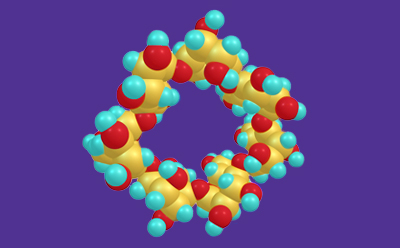
Cyclodextrins: Excellent Solubility and Stability
Enhance API solubility and stability with API-cyclodextrin inclusion complexes that solubilize and protect your API – and release it upon administration. Select the cyclodextrin type best suitable for your application:
Effective Solubilization with Polyethylene Glycols
Rely on PEGs as versatile solubilizers to improve the solubility of a wide range of APIs. Our offering includes a comprehensive PEG portfolio for a variety of applications:

Meglumine: Two Grades, Many Applications
Take a versatile choice with meglumine, a multifunctional excipient that serves as a counterion to form API salts in situ, as solubilizer, stabilizer and pH adjuster. Select your grade here:

API Processing Chemicals: Tackle Solubility Challenges Early
Address solubility challenges early in drug development with techniques such as salt and cocrystal formation, or polymorph screening. Find a comprehensive list of products here:

Surfactants: Enhanced Solubility and Bioavailability
Using surfactants to enhance API solubility through solubilization is an effective and well-established approach. Select the surfactant type and grade that best suits your needs:
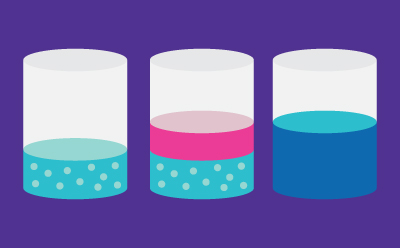
Maximizing Solvent Capacity with Co-solvents
Utilizing co-solvents to modify the polarity of the solvent-mixture makes the solvent more compatible with your poorly soluble API, and improves solvent capacity. Find commonly used co-solvents here:
Emprove® Program: Supporting Your Risk Mitigation Efforts
Our commitment to advancing pharmaceutical development is backed by the Emprove® Program, which provides comprehensive documentation to expedite your journey to market. For high-risk applications such as parenteral administration, our Emprove® Expert excipient portfolio is particularly well suited as it features specified low endotoxin and bioburden levels to support risk mitigation efforts.
Frequently Asked Questions
What are common challenges associated with poorly soluble APIs?
Poorly soluble active pharmaceutical ingredients (APIs), particularly those classified as BCS Class II and IV, often face significant challenges as the API needs to be dissolved to achieve adequate bioavailability and therapeutic effect. For liquid formulations, additional challenges include maintaining solubility throughout the product's shelf life and ensuring that they remain free from visible particles. Effective solubility enhancement techniques are essential for overcoming these hurdles. Learn more about solubility challenges here.
What techniques can be used to tackle solubility challenges when developing liquid formulations?
Various techniques can address solubility challenges, including chemical modification during API processing (e.g., salt and cocrystal formation), particle size reduction, and the use of solubility-enhancing functional excipients such as cyclodextrins, meglumine, surfactants, or co-solvents. These methods aim to enhance the physicochemical properties of APIs, ultimately improving their solubility and bioavailability in liquid dosage forms. Explore solutions for liquid formulations here.
How do cyclodextrins improve solubility and stability of APIs?
Cyclodextrins are cyclic oligosaccharides that can form inclusion complexes with APIs. These complexes protect the API from degradation and show an improved hydrophilicity, making cyclodextrins a valuable tool in liquid formulations that can be used to effectively increase API solubility and stability. Read our technical article to learn more.
Related Webinars

Related Articles
- This article describes the solubility challenge presented by many small molecule APIs and strategies to overcome these issues during the formulation process.
- Discover strategies to enhance solubility in injectable formulations using excipients, including cyclodextrins, meglumine, and polyethylene glycols.
- Our overview of API solubility and dissolution enhancement methods can help you decide between the many options to take during formulation.
- Instead of addressing API solubility during formulation, tackle it early during development. Read about the various methods for API processing.
Related Documents
- White Paper: The Developability Classification System (DCS): Enabling an Optimized Approach for Formulation of Poorly Soluble Molecules
This white paper explores the DCS and its implications for solubility enhancement strategies.
- Meglumine Brochure: Double Your Benefit with Meglumine
Discover meglumine, a versatile excipient that can be used as advanced API intermediate or functional excipient to improve solubility and stability.
- Cyclodextrin Brochure: Unlock the Possibilities—Enhancing Solubility and Stability with Cyclodextrins
Explore how cyclodextrins help overcome solubility and stability hurdles in formulations, their mode of action and selected case study data.
- Polyethylene Glycol Brochure: Benefit from the Versatility of PEGs
Learn how PEGs are true allrounders in pharmaceutical formulations, with applications ranging from consistency adjustment to lubrication and solubility enhancement.