Skip to Content
Merck
CN

37894

Imidacloprid

PESTANAL®, analytical standard

Sign In to View Organizational & Contract Pricing.

Select a Size


About This Item

Empirical Formula (Hill Notation):
C9H10ClN5O2
CAS Number:
Molecular Weight:
255.66
NACRES:
NA.24
PubChem Substance ID:
UNSPSC Code:
41116107
MDL number:
Technical Service
Need help? Our team of experienced scientists is here for you.
Let Us Assist
Technical Service
Need help? Our team of experienced scientists is here for you.
Let Us Assist

Product Name

Imidacloprid, PESTANAL®, analytical standard

InChI

1S/C9H10ClN5O2/c10-8-2-1-7(5-12-8)6-14-4-3-11-9(14)13-15(16)17/h1-2,5H,3-4,6H2,(H,11,13)

SMILES string

[O-][N+](=O)NC1=NCCN1Cc2ccc(Cl)nc2

InChI key

YWTYJOPNNQFBPC-UHFFFAOYSA-N

grade

analytical standard

product line

PESTANAL®

shelf life

limited shelf life, expiry date on the label

technique(s)

HPLC: suitable
NMR: suitable
gas chromatography (GC): suitable

mp

140-146 °C

suitability

passes test for identity (NMR)

application(s)

agriculture
environmental

format

neat

Quality Level

Looking for similar products? Visit Product Comparison Guide

Related Categories

Application

Refer to the product′s Certificate of Analysis for more information on a suitable instrument technique. Contact Technical Service for further support.

General description

Imidacloprid is a systemic chloronicotinyl insecticide, which can be effectively used in agriculture to control pests like aphids, scale insects, whiteflies, leafhoppers, some coleoptera and some lepidoptera species.

Find more information here: Neonicotinoids

Legal Information

PESTANAL is a registered trademark of Merck KGaA, Darmstadt, Germany

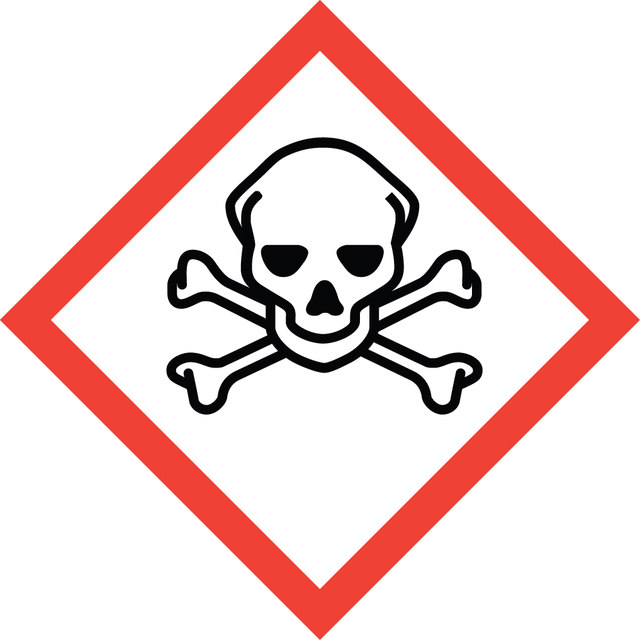
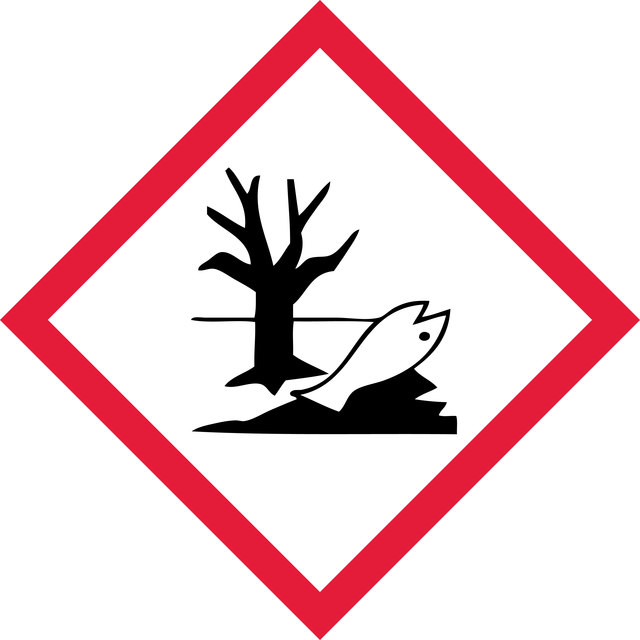
pictograms

Skull and crossbonesEnvironment

signalword

Danger

hcodes

Hazard Classifications

Acute Tox. 3 Oral - Aquatic Acute 1 - Aquatic Chronic 1

Storage Class

6.1C - Combustible acute toxic Cat.3 / toxic compounds or compounds which causing chronic effects

wgk

WGK 2

flash_point_f

Not applicable

flash_point_c

Not applicable

ppe

dust mask type N95 (US), Eyeshields, Faceshields, Gloves

Regulatory Information

农药列管产品
This item has

Choose from one of the most recent versions:

Certificates of Analysis (COA)

Lot/Batch Number

Don't see the Right Version?

If you require a particular version, you can look up a specific certificate by the Lot or Batch number.

Already Own This Product?

Find documentation for the products that you have recently purchased in the Document Library.

Visit the Document Library

Abhishek Mandal et al.
The Science of the total environment, 577, 376-385 (2016-11-08)
Agri-wastes biochars viz. eucalyptus bark (EBBC), corn cob (CCBC), bamboo chips (BCBC), rice husk (RHBC) and rice straw (RSBC) and acid treated RSBC (T-RSBC), were characterized for their physico-chemical properties and sorption behaviour of atrazine and imidacloprid was studied. Kinetics
Mara Andrione et al.
Scientific reports, 6, 38110-38110 (2016-12-03)
Exposure to neonicotinoid pesticides is considered one of the possible causes of honeybee (Apis mellifera) population decline. At sublethal doses, these chemicals have been shown to negatively affect a number of behaviours, including performance of olfactory learning and memory, due
Yixi Zhang et al.
Insect biochemistry and molecular biology, 79, 50-56 (2016-10-30)
Target insensitivity contributing to imidacloprid resistance in Nilaparvata lugens has been reported to occur either through point mutations or quantitative change in nicotinic acetylcholine receptors (nAChRs). However, the metabolic resistance, especially the enhanced detoxification by P450 enzymes, is the major
Lin-Rui Gao et al.
Journal of agricultural and food chemistry, 64(47), 9078-9088 (2016-10-30)
As a neonicotinoid pesticide, imidacloprid is widely used to control sucking insects on agricultural planting and fleas on domestic animals. However, the extent to which imidacloprid exposure has an influence on cardiogensis in early embryogenesis is still poorly understood. In
DDT resistance in Drosophila correlates with Cyp6g1 over-expression and confers cross-resistance to the neonicotinoid imidacloprid
Decourtye A, et al.
Molecular Genetics and Genomics, 266, 556-563 (2001)

Protocols

Learn more about Neonicotinoids - active substances used in plant protection products to control harmful insects.

Analysis of banned neonicotinoid insecticides from dandelion blossoms using QuEChERS and LC-MS.

Our team of scientists has experience in all areas of research including Life Science, Material Science, Chemical Synthesis, Chromatography, Analytical and many others.

Contact Technical Service